
I was sitting at my desk in the middle of an ordinary afternoon when I noticed my hands were balled into fists. The frustration had become so constant, so woven into who I was, that I had stopped feeling it.
I was in my forties. I had built a career in technology. I had founded companies and worked across continents. I had the résumé, the reputation, and the life that many people aspire to have. However, those people don’t know about my panic attacks. The racing heart at 3 a.m., the tightness in my chest before meetings, and the low hum of dread that never leaves.
That was the year my father fell from a rooftop at work, dropping thirty feet onto concrete. He survived, but the impact left him permanently disabled. My family came slowly apart under the weight of it all: the disability, the financial pressure, and grief no one knew how to talk about. My mother eventually left, leaving my little sisters and me to carry on with what remained.
My parents had come to Canada from Portugal with next to nothing. They were blue collar workers who labored hard and lived simply. There was enough, but not much beyond that, and certainly nothing close to private school tuition. The world I grew up in was modest, practical, and far removed from the kinds of opportunities that families with privilege take for granted.
Each year, a recruiter from a prestigious arts school in Toronto would tour the local public schools in search of musical talent. I was seven years old, and in grade two, when my teacher pulled me out of class to sing for one of them. I was offered a spot with reduced tuition. My parents found a way to make it work. They saw it as a chance for a life beyond what they had imagined for me. On the outside, the place looked like privilege, a place famous for its music program and the musicians it produced. However, inside it was a toxic wasteland, built on fear and intimidation.
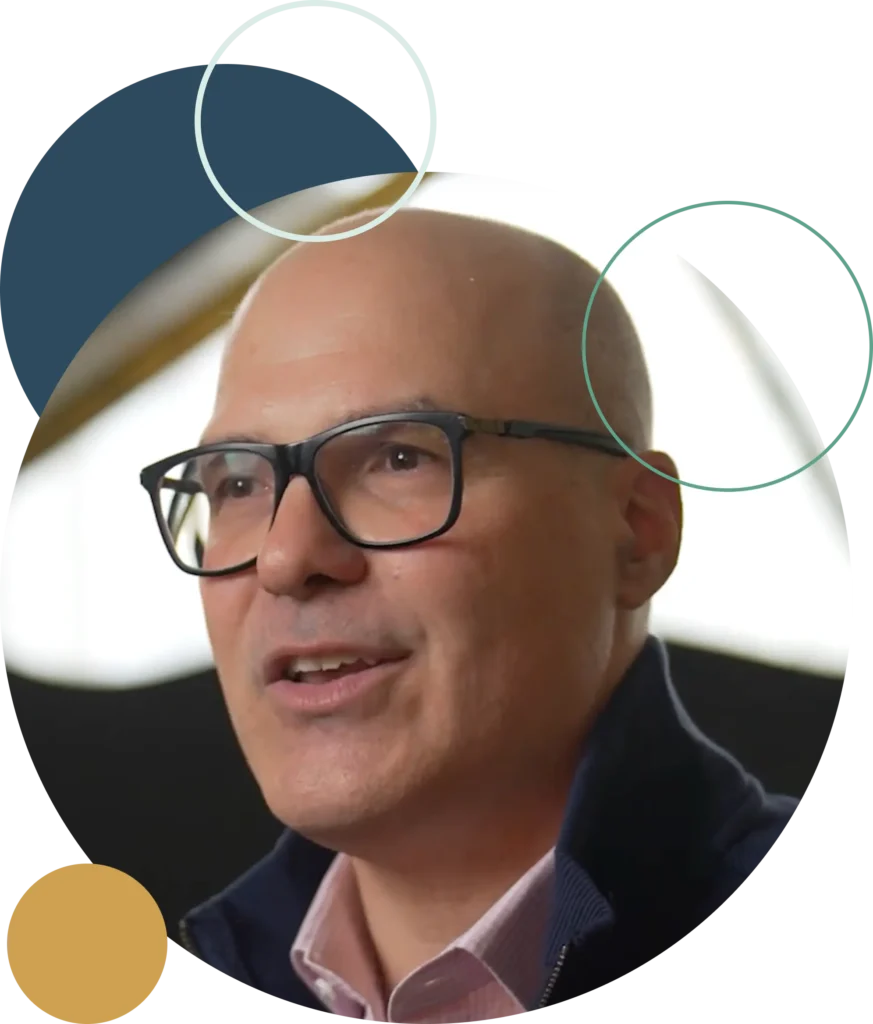
I was mocked for my weight, for my parents’ accents, and for not fitting the mould. I was beaten by teachers who blamed me afterward, insisting I had brought it on myself. I watched helplessly as a teacher kicked a boy, breaking his arm. I saw another teacher hurl a heavy book at a student, hitting him in the head, nearly knocking him unconscious.
The institution protected itself, and the culture demanded silence. For most of us, the damage settled inward. For one boy, the abuse became unbearable. He jumped off an overpass, taking his own life.
No one talked about it. We had no words for it. We just coped the only way we knew how, quietly and alone.
I fought back the only way I could. I buried it and performed. For years, I chased things: experiences, grades, goals, titles, and success. The measurements looked impressive, but my body kept a different score. Stomach ulcers and panic attacks became a regular part of my life. The depression came in waves that I learned to ride but could never outgrow. The relationships closest to me kept reflecting back the trauma I didn’t know how to process.
My sister developed a rare form of ovarian cancer. Her original diagnosis was missed for two years by a negligent doctor, and by the time the mistake was discovered, the disease had reached stage four. She fought with extraordinary courage, but ultimately lost her battle. In her final months, time together was the only thing we had left.
During those many months in lockdown, I watched the people I loved most suffer, unable to do anything about it. Even worse, I could feel the darkness I had been running from my whole life starting to overtake me.
I had first encountered Alan Watts in my twenties. His writing opened a door into Zen Buddhism and eastern philosophy that was clear, grounded, and free of doctrine. His ideas had a profound impact on me, but understanding them and living them are two very different things. Now, with everything falling apart, understanding wasn’t enough.
By this point, I had been studying eastern philosophy, psychology, and the neuroscience of stress and trauma for decades. I had read hundreds of books, listened to thousands of hours of lectures, attended retreats, and studied teachers whose ideas stretched back for centuries. Now, I wanted to go deeper. So, I trained as a meditation coach and was initiated into Kriya Yoga, entering a tradition rooted in breath work, concentration, and the direct experience of the self.
I had been studying eastern philosophy, psychology, and the neuroscience of stress and trauma for decades by then. Hundreds of books, thousands of hours of lectures, retreats, and teachers whose ideas stretched back centuries. Now I went further. I trained as a meditation coach and was initiated as a Kriya Yogi, entering a tradition rooted in breathwork, concentration, and the direct experience of the self.
Watts wrote that our suffering comes from grasping. From the attachment to our identities, our expectations, and our stories about how life should unfold. It was only after years of meditation practice, inside the worst periods of my life, that my understanding of this finally gave way to experience. It wasn’t just an intellectual exercise anymore. I was watching myself do it, and what surprised me most was how.
Think of someone who quits smoking and can tell you exactly how many hours it’s been since their last cigarette. They haven’t let go; they’re just hanging on from the other side. I was doing the same thing with my trauma, pushing it away so hard that it completely shaped me.
Holding on and pushing away can become the same struggle. One clings. The other resists. Healing begins in the space between them, where you learn to hold your trauma firmly enough to be present with it, yet loosely enough to let it play out and fade. The ancient traditions called this the Middle Way.
During that period, I sat in meditation for hours each day, but the lessons didn’t actually come from that. They came from the everyday moments of life: an argument with someone, a project that fell apart, the tightening in my chest when things weren’t going my way, a moment where I caught myself performing instead of being present. That is where the lessons are found. Meditation is just preparation; your life is the practice.
With time, something shifted. The anxiety stopped running my life. The depression that had followed me since childhood loosened its grip. Nothing on the outside had visibly changed, yet inside I was fundamentally different. I became calmer and less reactive, more present with people and more at peace when I’m alone. I found myself more available to my family, while my work improved. I became comfortable with the quiet moments that I used to fill with noise and distraction. I started noticing the good in an ordinary day while feeling more connected with everything around me.
It didn’t make the hard days go away, but it made them much lighter to carry. And where there used to be darkness, there’s hope.
The Flowcraft program is built on everything those years taught me. I know what it feels like to carry more than you think you can handle, and I’ve come to believe that the challenges themselves are the path. If that resonates, Flowcraft is for you.